The Question
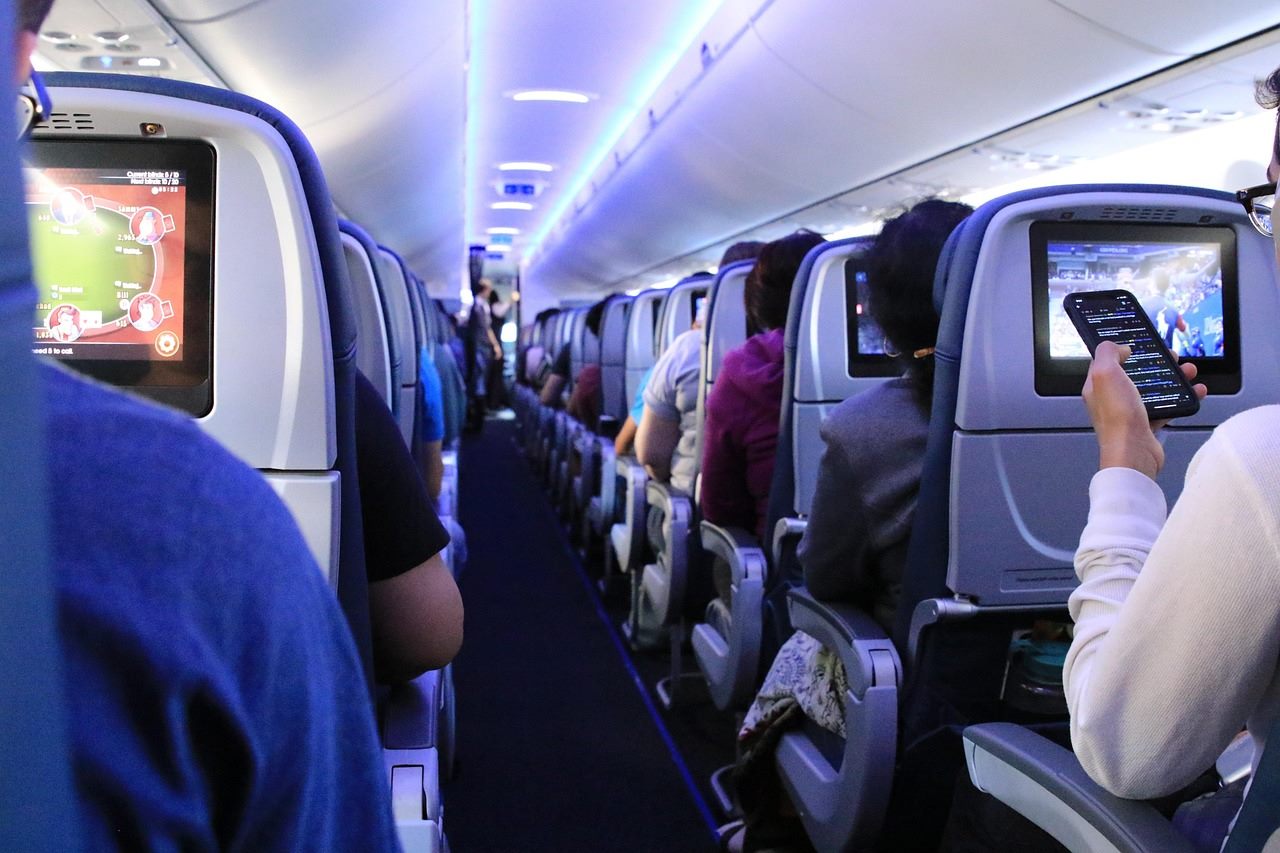
Remember the golden age you are living in right now. A weekend in Barcelona for less than a restaurant dinner. A £15 hop to Dublin. Flights so cheap that people commuted between countries. Your children may hear these stories the way you hear about penny cinema tickets — charming, ancient, gone.
Flying is only about 2.5% of global carbon dioxide emissions, but here is the uncomfortable truth: for an ordinary person, no single hour of life produces more planet-warming gas than an hour in an airplane seat. One return flight from London to New York emits roughly as much per passenger as an average person in dozens of countries emits in a year. Governments have finally noticed — and the question is no longer whether flying gets more expensive, but how fast, and by how much.
What the Evidence Shows
Start with the strange history. In 1944, delegates meeting in Chicago wrote the convention that still governs world aviation — and it effectively exempted jet fuel on international flights from tax. Drivers pay fuel duty; airlines, for eight decades, have not. That loophole is now closing from three directions at once. First, Europe's Emissions Trading System — a scheme where polluters must buy permits for every tonne of carbon they emit — has ended free permits for airlines from 2026, meaning carriers now pay full price for their pollution on flights within Europe. Second, the ReFuelEU law forces airlines to blend in sustainable aviation fuel, or SAF — fuel made from waste cooking oils or manufactured synthetically instead of pumped from the ground — starting at 2% in 2025 and climbing relentlessly to 70% by 2050. The catch: SAF costs three to five times more than ordinary jet fuel.
Third, governments are attacking demand directly. France has banned short domestic flights on routes where a train covers the trip in under two and a half hours. And the industry itself has stopped pretending. Ryanair's chief executive Michael O'Leary — the man who built an empire on rock-bottom fares — has publicly declared that the era of the €10 ticket is over, blaming fuel and environmental costs. When Europe's loudest discount airline says discounting is finished, believe it.
"Aviation enjoyed the twentieth century's most generous hidden subsidy: a global agreement not to tax its fuel. Every other polluting industry paid something toward its damage. Airlines paid nothing. The unwinding of that anomaly is not a policy proposal anymore — it is scheduled, legislated, and dated."
— European Transport Policy Review — "Pricing the Sky," 2025Campaigners are pushing further with a frequent flyer levy — a tax that rises with each flight you take in a year, aimed at a startling statistic: roughly 1% of the world's population causes about half of all aviation emissions. The alternatives, meanwhile, are growing but limited. Night trains are being revived across Europe, with new sleeper routes linking Berlin, Paris, Brussels, and Vienna. Electric planes exist, but battery weight confines them to small aircraft on short regional hops. Hydrogen-powered airliners remain a 2035-and-beyond project, with Airbus repeatedly shifting its timeline.
"Your cheap weekend in Barcelona was never cheap. Someone else was paying — and the invoice has finally arrived."
Why This Is Happening
The free ride was always politically fragile, and climate deadlines broke it. European governments have legally binding net-zero targets, and aviation is the sector making the least progress. A tax exemption written in 1944 — before the jet engine even entered passenger service — cannot survive an era when governments are taxing carbon in home heating and steel. Aviation is simply the last untouched sector, and lawmakers know voters who fly a lot are a minority.
Green fuel is the only real fix, and it is expensive by nature. Batteries are too heavy for long flights, and hydrogen needs entirely new planes and airports. That leaves SAF — and making fuel from waste oils or from captured carbon and clean electricity costs several times more than refining crude. As blending mandates ratchet up year after year, that premium flows straight into ticket prices. There is no cheap decade ahead in the chemistry.
The costs stack on top of each other. Carbon permits, SAF mandates, national ticket taxes, and flight bans are separate policies, arriving in the same decade, all pushing the same direction. Airlines operate on wafer-thin margins — often just a few euros of profit per passenger — so they cannot absorb these costs. They will pass them on, and they have said so openly.
What Could Happen
European short-haul fares climb well above inflation as carbon and SAF costs compound. The €20 impulse fare disappears; families still fly, but less often and after more thought — one big trip instead of three small ones. Night trains absorb much of the short-haul market, and airlines shift capacity toward longer routes where no train competes.
Europe prices carbon aggressively while the US, Gulf carriers, and Asia move slowly. Long-haul passengers route around European hubs, EU airlines cry foul, and Brussels partially retreats to protect its carriers. Fares rise in Europe, but less than headline policies suggest — and global aviation emissions barely bend.
Synthetic fuel costs collapse faster than forecast — driven by ultra-cheap solar power in the 2030s — or electric regional aircraft scale up rapidly. Green flying becomes affordable before the mandates bite hard, and ticket prices stay roughly flat in real terms. Possible, but every current cost curve says the crossover comes after 2033, not before.
What Can We Do
You cannot vote the carbon bill away, but you can get ahead of it — financially and practically — while shaping how fairly it lands.
Lock in the big trips sooner rather than later. If there is a long-haul journey you have promised yourself — the family reunion abroad, the once-in-a-lifetime destination — the economics favor going in the next few years rather than the mid-2030s. Real prices are on a rising escalator; plan around it.
Learn the train map now. Europe's night train network is expanding every year, and sleeper tickets booked early often beat flights once you count airport transfers, baggage fees, and a night's hotel. Making the train your default for trips under six hours is the single easiest adjustment to the new era.
Spend your flights where they matter. If a frequent flyer levy arrives, your first flights each year will be the cheapest. Consolidate: one longer holiday instead of four mini-breaks cuts your emissions, your costs, and your exposure to per-flight taxes at a stroke.
Push for the fair version of the policy. There is a real difference between a levy that targets the executive flying weekly and a blunt tax that prices out the family visiting grandparents once a year. Support frequent flyer levies and SAF investment over flat ticket taxes — the polluter-pays version protects the occasional traveler. The rules are being written this decade; say something while they are.
- European Commission — ReFuelEU Aviation Regulation Implementation Report, 2025
- EU Emissions Trading System — Aviation Allowance Phase-Out Schedule, 2024–2026
- International Council on Clean Transportation — "SAF Cost Trajectories to 2050," 2025
- European Transport Policy Review — "Pricing the Sky," 2025
- Possible & ICCT — "Frequent Flyer Levy: Distributional Analysis," 2024
- Forecast The World Research Desk — 800+ data sources