The Question
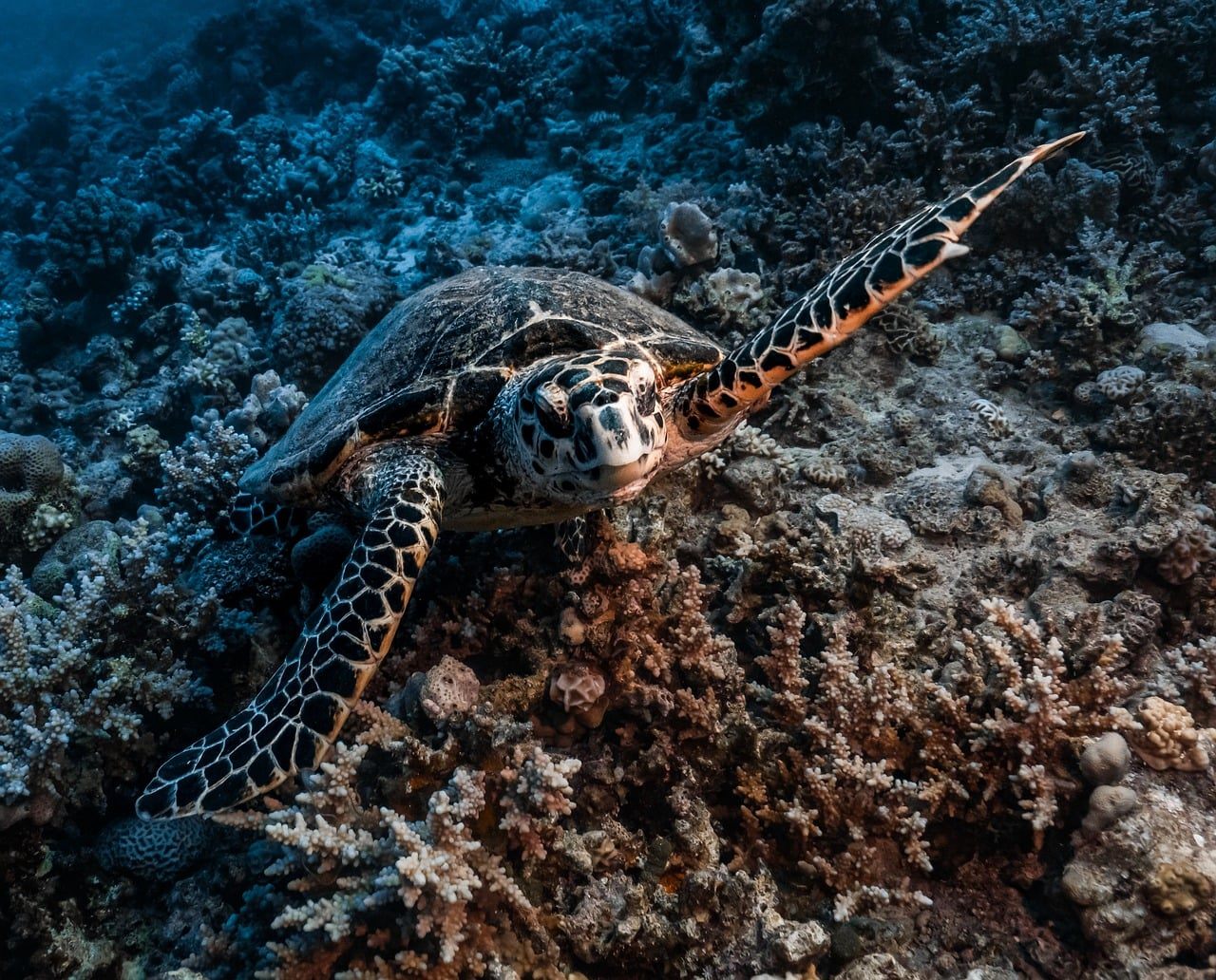
Dive on a healthy reef and it roars with color — purple fans, orange fingers, fish stacked like confetti. Dive on the same reef after a hot summer and it can look like a graveyard dusted in snow. The coral has turned bone-white. Give it a few more weeks and the white fades to brown slime, then to bare gray rubble. That is not a slow fade over centuries. It can happen in a single season, and it is happening now, on livestream, in front of scientists who cannot look away.
Here is the uncomfortable truth about coral. It is an animal, not a rock, and it survives thanks to microscopic algae living inside its tissue that make its food from sunlight. When the water gets too hot, the coral panics and expels those algae — a process called bleaching — losing both its color and its kitchen. If the heat passes quickly, it can reinvite the algae and recover. If the heat lingers, the coral simply starves. The question is no longer whether reefs are in trouble. It is whether we will watch most of them die within a single human generation.
What the Evidence Shows
The numbers are stark and getting worse. The world has already lost roughly half of its living coral since the 1950s. In 2024, the US National Oceanic and Atmospheric Administration confirmed the fourth global bleaching event on record — the most widespread ever measured — with heat stress hitting more than 70% of the world's reef areas across the Atlantic, Pacific, and Indian Oceans at once. Australia's Great Barrier Reef, the largest living structure on Earth, has now suffered mass bleaching multiple times in under a decade, including back-to-back years that gave the coral no time to heal between blows.
The forecasts from the world's climate scientists are even bleaker. The Intergovernmental Panel on Climate Change — the UN body that pools thousands of researchers — projects that at 1.5°C of warming above pre-industrial levels, somewhere between 70% and 90% of tropical reefs vanish. At 2°C, the figure is roughly 99%. We are on track to pass 1.5°C within years, not decades. This is why a majority of reef scientists now quietly plan not for prevention but for triage: which reefs can be saved, and which must be recorded as they go.
"We are the first generation with the technology to document the death of an entire ecosystem in real time, and the last generation with the power to stop it. Both of those facts are true at once, and both should terrify us."
— Global Coral Reef Monitoring Network, Status Report, 2025And yet the science is fighting back with startling ingenuity. Researchers now perform "coral IVF" — collecting the eggs and sperm reefs release on a few synchronized nights each year, rearing millions of baby corals in tanks, and reseeding damaged reefs. Labs are breeding "assisted evolution" corals, cross-breeding the toughest survivors to create strains that shrug off heat that kills their neighbors. The Mars Coral Reef Restoration project in Indonesia has already regrown square kilometers of reef using simple steel frames called "reef stars." None of this is fast enough to outrun the warming — but it may be enough to keep patches alive as living seed banks for a cooler future.
"We may become the only species that ever filmed the funeral of a world it had the power to save."
Why This Is Happening
The ocean is absorbing the planet's fever, and coral has almost no tolerance for it. The seas soak up more than 90% of the extra heat humans trap with greenhouse gases. Corals evolved in remarkably stable warm water and live close to their thermal limit already — a rise of just one or two degrees Celsius for a few weeks is enough to trigger mass bleaching. As marine heatwaves grow longer and more frequent, the recovery windows between them are closing.
The blows are landing faster than reefs can rebuild. A healthy reef can bounce back from a single bleaching, but recovery takes ten to fifteen years. When severe heat returns every two or three years — as it now does on the Great Barrier Reef — the coral never regains its footing. Add pollution, overfishing that strips away the fish which keep reefs clean, and ocean acidification that makes it harder for coral to build its skeleton, and the ecosystem is fighting on every front at once.
The stakes reach far beyond the water. Reefs cover under 1% of the ocean floor yet shelter a quarter of all marine species and feed close to a billion people. They are also natural sea walls, absorbing wave energy that would otherwise batter coastlines from Florida to the Philippines. Reef tourism underpins the economies of Australia, the Caribbean, and Southeast Asia, worth tens of billions of dollars a year. When the coral dies, the fish, the fishermen, the divers, and the storm protection go with it.
What Could Happen
Warming blows past 1.5°C, bleaching becomes near-annual, and the majority of the world's reefs collapse into algae-covered rubble. But pockets survive — in naturally cooler upwelling zones, in well-managed marine reserves, and in restoration sites stocked with heat-bred coral. These become living arks. The reef you snorkel in 2040 is a curated garden, not a wild wonder.
Heat-resistant coral strains, scaled-up IVF, and aggressive expansion of marine protected areas slow the losses enough that a meaningful fraction of reefs — perhaps a third — hang on in degraded but living form. Emissions still peak, but reef science matures fast enough to hold the line in key regions until the climate stabilizes late in the century.
The world holds warming near 1.5°C through fast decarbonization, and reefs — battered but not broken — begin a slow recovery aided by restoration. This requires global emissions to fall faster than any current policy delivers. Possible in principle, but on today's trajectory it is the least likely of the three.
What Can We Do
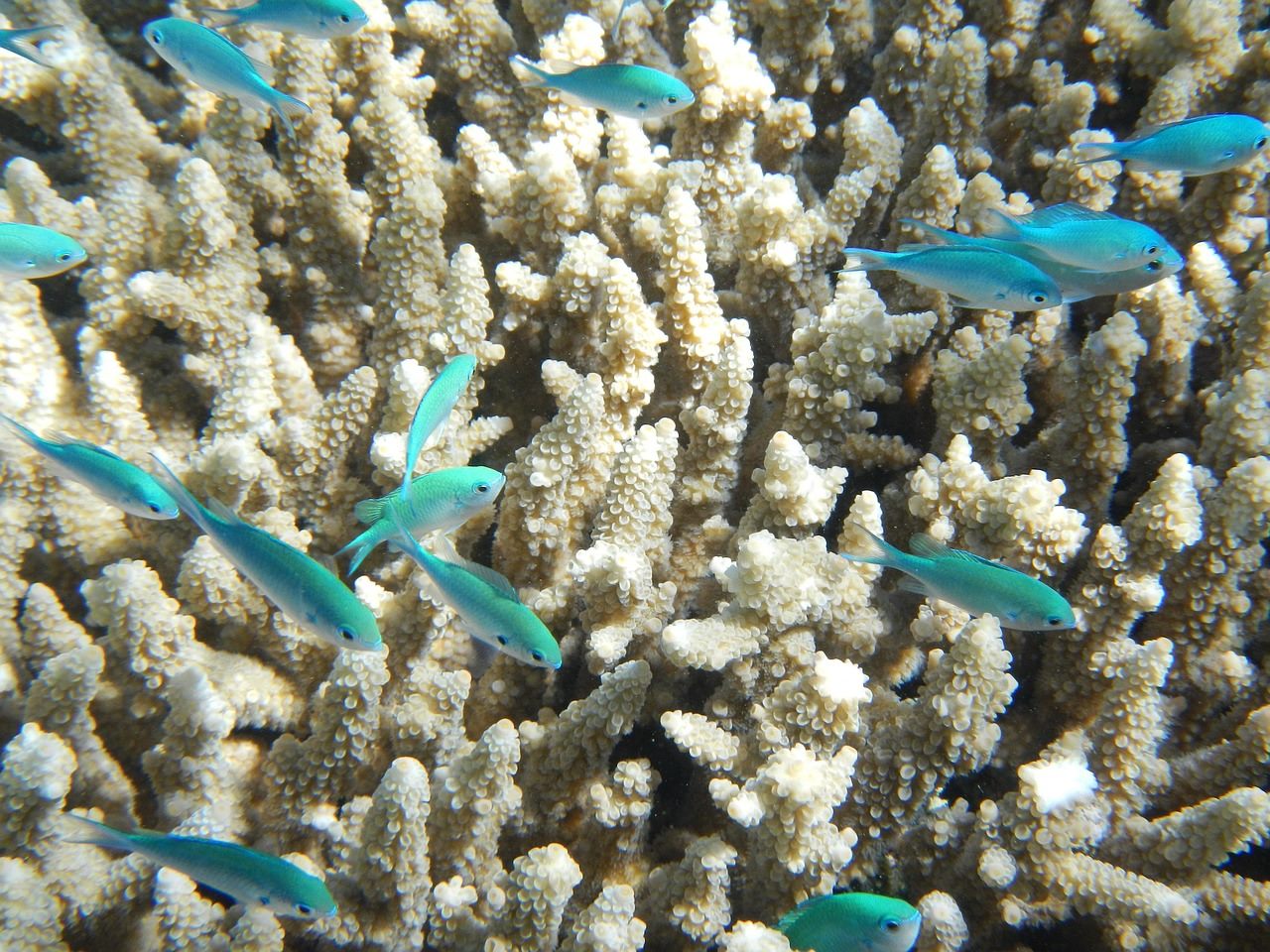
The single biggest lever is the one that feels most abstract: the temperature of the ocean, set by global emissions. But there are concrete things within reach — for governments, for travelers, and for you the next time you stand on a beach with sunscreen in hand.
Cut the emissions that heat the sea. Reefs live or die by the ocean's temperature, and that is set by carbon. Backing clean energy, driving and flying less, and voting for serious climate policy is not a symbolic gesture for coral — it is the only intervention that addresses the actual cause. Every tenth of a degree avoided is a measurable slice of reef spared.
Choose reef-safe sunscreen and seafood. Certain sunscreen chemicals — oxybenzone and octinoxate — are toxic to coral and have been banned in places like Hawaii; mineral zinc-based sunscreens are a simple swap. So is avoiding fish caught by reef-destroying methods; look for sustainably certified seafood and skip species pulled from collapsing reefs.
Support marine protected areas and restoration. Reefs inside well-enforced no-fishing zones recover measurably faster and resist heat better. Donations to reputable restoration groups — the ones breeding heat-tolerant coral and running IVF programs — fund the seed banks that may repopulate the ocean later. Political support for expanding protected waters matters just as much.
Travel like a guest, not a consumer. If you dive or snorkel, use operators certified for low-impact practices, never touch or stand on coral, and spend your money where reef protection is taken seriously. Reef tourism can fund conservation — or trample it. Which one depends on the choices of the people in the water, including you.
- NOAA Coral Reef Watch — Fourth Global Bleaching Event Bulletin, 2024
- IPCC — Sixth Assessment Report, Ocean and Cryosphere Chapter, 2023
- Global Coral Reef Monitoring Network — Status of Coral Reefs of the World, 2025
- Australian Institute of Marine Science — Great Barrier Reef Long-Term Monitoring, 2025
- Mars Coral Reef Restoration Program — Reef Star Recovery Data, 2024
- Forecast The World Research Desk — 800+ data sources