The Question
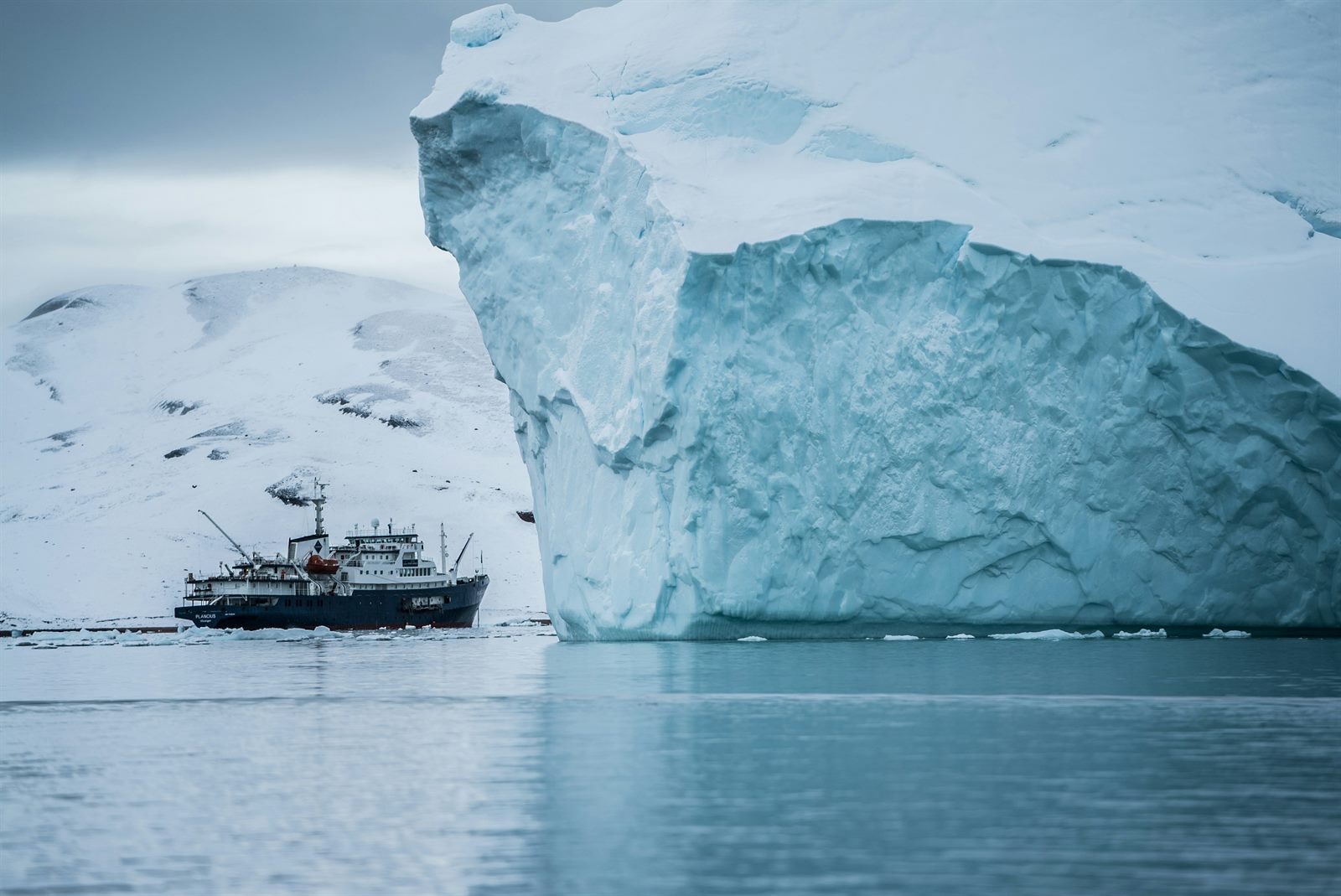
Imagine a shipping container leaving Shanghai bound for Rotterdam. Today it sails south through the Indian Ocean, up the Suez Canal, and around Europe — a five-week voyage past pirates and choke points. Now imagine it turning north instead, hugging the top of Russia through open water that did not exist a generation ago, and arriving nearly two weeks sooner. That route — the Northern Sea Route — can cut the Asia-to-Europe journey by around 40% compared with Suez. Every shipping executive on Earth is doing this math.
The Arctic is warming almost four times faster than the global average, a phenomenon scientists call Arctic amplification. Projections now put the first ice-free summer — when the polar sea ice essentially vanishes for a season — somewhere in the 2030s or 2040s. An ocean that was sealed by ice for all of recorded history is becoming navigable, and beneath it sits a fortune in oil, gas, and metals. The question is not whether nations compete for it. They already are. The question is whether that competition stays cold.
What the Evidence Shows
The militarization is already well underway, and Russia is furthest ahead. Moscow has reopened dozens of Soviet-era Arctic bases, built new ones, and fields a fleet of more than 40 icebreakers — the specialized ships that smash through ice to escort others. The United States, by contrast, has just two aging working icebreakers. Russia treats the Northern Sea Route as its own national waterway and demands that foreign ships request permission and take Russian pilots aboard — a claim most of the world disputes.
China, though its nearest territory is over a thousand miles from the Arctic Circle, has declared itself a "near-Arctic state" and launched a "Polar Silk Road" to fold the new routes into its global trade network. Meanwhile the map of alliances has been redrawn: Finland and Sweden, long neutral, joined NATO after Russia's invasion of Ukraine, meaning seven of the eight Arctic nations are now in the Western alliance and one — Russia — is not. The geology raises the stakes further. The US Geological Survey estimates the Arctic holds about 13% of the world's undiscovered oil and 30% of its undiscovered natural gas, plus rare-earth minerals in Greenland that drew open interest from a US president who floated buying the island outright.
"The Arctic is the only place on Earth where a great-power border, a melting resource treasure, and a brand-new ocean are all appearing at the same time. History does not have a gentle precedent for that combination."
— Arctic Security Review, Strategic Studies Quarterly, 2025Tensions already flicker at the edges. Russia planted a titanium flag on the seabed beneath the North Pole in 2007 to press its claim to the Lomonosov Ridge, an underwater mountain range that several nations insist is an extension of their own continental shelf under the Law of the Sea treaty. Fish stocks are migrating north into contested waters, sparking disputes over who may catch them. The Svalbard archipelago, governed by a century-old treaty, is a recurring flashpoint. And the tools of modern pressure — shadowing warships, severing undersea cables, and blocking passages — are exactly the kind of gray-zone moves that can escalate before anyone means them to.
"The ice that once kept the great powers apart is the very thing now melting away between them."
Why This Is Happening
The prize is enormous and newly reachable. Shorter shipping lanes save fuel, time, and money on a scale that reshapes global trade. Beneath the seabed lie hundreds of billions of dollars in oil, gas, and the rare-earth metals that power everything from wind turbines to guided missiles. For decades the ice made all of it untouchable. As it retreats, a resource frontier the size of a continent is suddenly open for the taking — and no established rulebook governs who gets what.
The legal lines are genuinely blurry. Ownership of the Arctic seabed is decided by claims over continental shelves under the UN Law of the Sea, and several nations' claims overlap directly on top of each other, most dramatically along the Lomonosov Ridge running under the pole. When the law is ambiguous and the reward is vast, countries tend to establish facts on the ground — bases, patrols, flags — rather than wait for a tribunal that may take decades and that Russia, in particular, may simply ignore.
The security architecture just fractured. The Arctic Council, the forum where the eight Arctic nations once cooperated on science and search-and-rescue, largely froze Russia out after 2022. With Finland and Sweden now in NATO, the region has hardened into a straight confrontation between the Western alliance and Moscow, with China pressing in from outside. Cooperation has been replaced by rivalry precisely as the stakes are rising fastest.
What Could Happen
By 2033 an incident crosses the line from friction to crisis: a blocked convoy on the Northern Sea Route, a severed undersea cable, an armed standoff over a resource claim or a fishing fleet. Warships shadow each other, diplomats trade ultimatums, and the world holds its breath — but both sides pull back from open combat. The Arctic becomes a permanent zone of managed hostility, like a colder Cold War.
Shipping and drilling expand under a patchwork of deals, insurance rules, and quiet accommodations. Nobody loves the arrangement, everyone arms up, but the money to be made keeps the powers talking. Confrontations stay verbal and legal rather than physical, and the feared clash keeps not quite happening — the outcome the trading world is betting on.
A gray-zone incident spirals: shots are fired, a vessel is sunk, and a NATO member invokes collective defense. The Arctic becomes an active theater of great-power war. This remains the least likely path because all sides understand the ruinous cost — but with warships, submarines, and nuclear-armed states crowding a lawless new ocean, the risk is no longer trivial.
What Can We Do
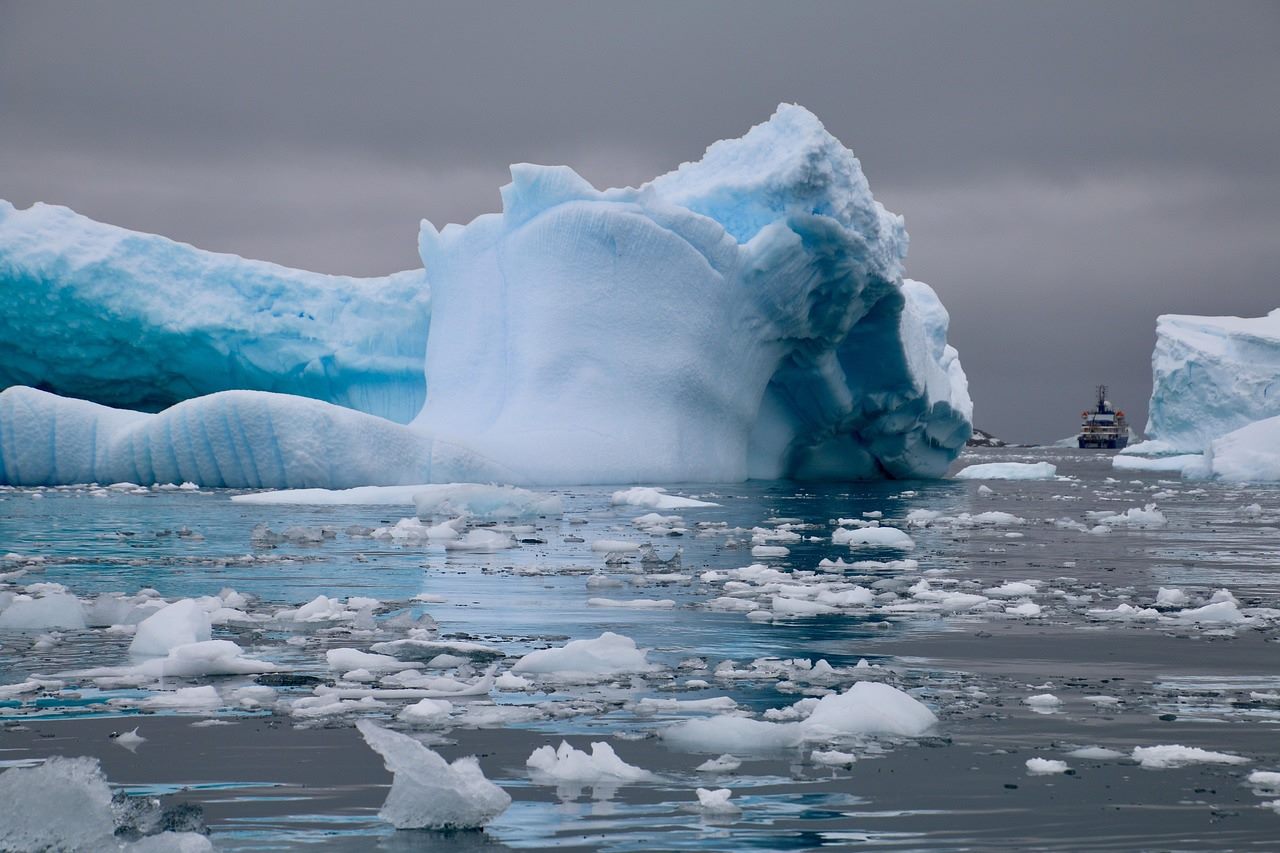
An ordinary reader cannot patrol the Bering Strait, but the Arctic's future is being decided by choices that citizens, voters, and consumers still influence. The window to set the rules is closing as the ice does.
Push for the Arctic to stay under the rule of law. The Law of the Sea treaty and demilitarization agreements are the thin barriers between managed rivalry and open conflict. Supporting leaders and policies that strengthen these institutions — rather than tear them up — is the single most useful thing a democratic public can do to keep the region cold.
Understand that the shortcut has a price. Every ton of cargo rerouted over a melting pole burns fuel and sails through fragile waters where a single spill would be near-impossible to clean. As a consumer and voter, backing genuine emissions cuts slows the very melting that is opening this dangerous frontier in the first place.
Watch the resource scramble, especially rare earths. The rush for Greenland's minerals and Arctic oil will be sold as economic opportunity. Ask who benefits, who bears the environmental cost, and whether Indigenous Arctic communities — who live there and are rarely consulted — have any say. Informed public pressure shapes which projects go ahead.
Take gray-zone warnings seriously. Cut undersea cables and shadowed warships sound like distant news, but they are the early tremors of exactly the confrontation this forecast describes. Following credible reporting on the Arctic, and rewarding politicians who treat it as a real strategic priority rather than a curiosity, keeps the issue where it belongs — in the open.
- US Geological Survey — Circum-Arctic Resource Appraisal, Updated 2024
- NOAA Arctic Report Card — Sea Ice and Amplification Data, 2025
- Strategic Studies Quarterly — "Arctic Security Review," 2025
- NATO — Northern Flank Posture Assessment, 2025
- Arctic Council Secretariat — Northern Sea Route Traffic Report, 2024
- Forecast The World Research Desk — 800+ data sources